Curia – Valladolid, Spain

Steroids, hormones and sterile APIs, from development through commercialization on one campus.

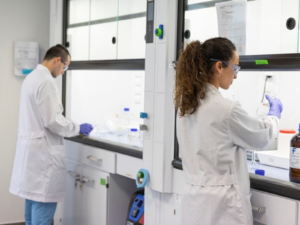
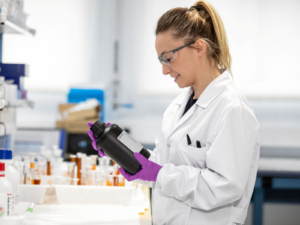
Curia’s Valladolid facility develops and manufactures APIs and intermediates through chemical synthesis and sterilizes them via aseptic filtration. Across a 50,000 m² site with more than 360 experts, Valladolid combines segregated steroid and hormone facilities, 20+ years of particle size control and OEB1-5 high-potency capability, inspected by the FDA, PMDA, the Spanish Agency and ANVISA.

Facility at a glance

Expertise

360+ experts

One of Curia’s largest technical teams, spanning steroids, sterile processing and high-potency manufacture.

Steroid capacity

100 m³

100 m³ of reactor capacity dedicated to steroid manufacture.

Non-steroid capacity

10 m³

10 m³ of reactor capacity for non-steroid APIs and intermediates.

Sterile processing

2 sterilization lines

Two aseptic filtration and crystallization lines sterilize APIs under containment.

Site scale

50,000 m²

A 50,000 m² campus inspected by the FDA, PMDA, the Spanish Agency and ANVISA, among other agencies.

What this site does

A one-stop shop from development to commercialization

Valladolid is a one-stop shop for steroid development through commercialization, with segregated facilities and aseptic processing purpose-built for this specialized product class.

20+ years of particle engineering

More than 20 years of experience in particle size control spans micronization, milling and controlled crystallization, supported by analytical method development.

Aseptic filtration and crystallization under containment

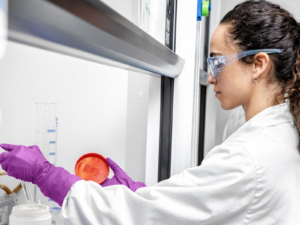
Two lines of aseptic filtration and crystallization run with closed-system containment technology, with leading-edge control of particle size distribution, particulate matter and endotoxins.

OEB1-5 with isolator technology

High-potency facilities span OEB1 through OEB5, with isolator technology for OEB4/5 work and micronization under containment.

Powered by renewable energy

Solar energy now supplies 50% of the Valladolid site’s electricity, lowering the carbon footprint of steroid, hormone and sterile API manufacture.

Why clients love this site

Recognized steroid and hormone expertise

Sterile API where competitors struggle

Particle engineering depth

Inspected by multiple agencies

How this site fits into Curia’s network
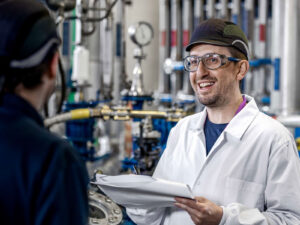
Curia’s Spanish biotechnology sites contribute fermentation from 5 to 15,000 L, from cell banks and strain improvement through scale-up, plus full downstream processing: aqueous and ATEX-certified organic solvent separation, tangential flow filtration, liquid-liquid extraction and industrial chromatography.

Rensselaer mirrors Valladolid’s high-potency capability in the US, with HPAPI production from grams to 120 kg and SafeBridge-recognized containment.

Tonneins runs dedicated sterile and non-sterile monobactam lines, deepening Curia’s European sterile API offering.

Origgio contributes hydrogenation, boronic acid chemistry and 549 m³ of synthesis capacity to the European API network.

Curia lab worker talking with another team member

Ready to realize your product’s full potential on your schedule?